
 Facebook
 X
X
 Pinterest
 Copy Link
Downsizing Done Right: Tips for Empty Nesters– Part 2: The Hidden Maintenance Burden of Owning a Larger Home.
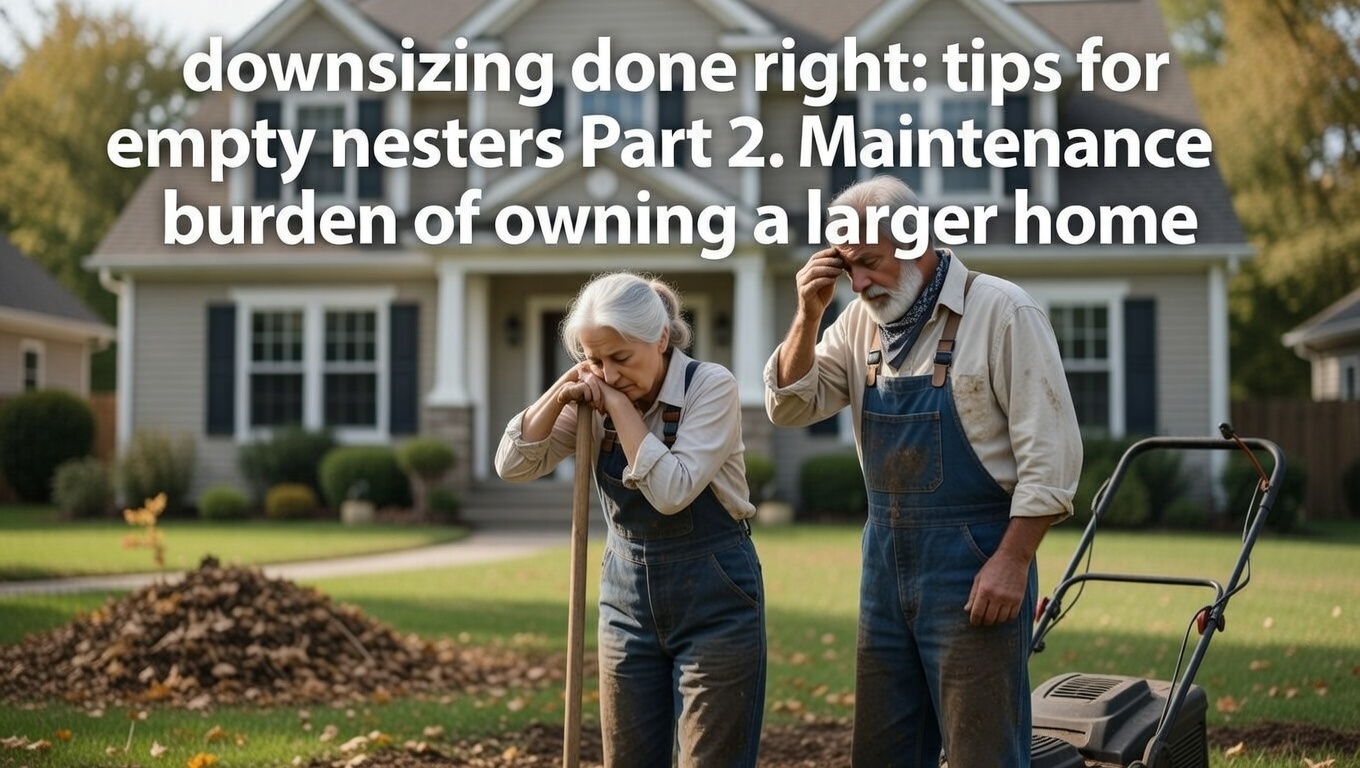
- Yard & Lawn Care — Mowing, weeding, edging, fertilizing, watering. In Minnesota, that’s 6–8 months of regular work.
- Snow Removal — Shoveling driveways, sidewalks, and decks—especially brutal in long winters. Hiring help costs $50–$150 per storm.
- Exterior Maintenance — Painting trim, power washing, cleaning gutters, sealing decks, fixing minor siding/roof issues.
- General Upkeep — Cleaning windows, pressure washing, minor repairs, seasonal prep (screens in spring, storm windows in fall).
After 20+ years in the same house, these tasks become autopilot. But they still steal time—time that could be spent with grandkids, golfing, traveling, or simply relaxing.
- Townhomes: Exterior maintenance (siding, roof, landscaping, snow removal) is typically handled by the HOA. You’re responsible for the interior and any attached garage, but the daily/seasonal grind is gone.
- Condos: The HOA covers the building exterior, roof, landscaping, snow removal, and common areas. You only handle inside the unit. Many owners add renters insurance (~$15–$30/month) for personal belongings and deductible protection.
Yes, HOA fees exist ($200–$600/month depending on amenities), but they often cost less than hiring lawn care, snow removal, and exterior painters separately. Newer townhomes (last 20 years) tend to have lower fees, modern systems (vinyl siding/windows, updated fire safety), and better long-term value. \
- A second home in Arizona, Florida, Texas, or another warm climate to escape Minnesota winters.
- A small lake place up north for summer escapes.
- Travel, hobbies, family time, or retirement savings.
The biggest benefit? More free time—time you’ve earned after decades of homeownership.

Downsizing Done Right – Tips for Empty Nesters. Part 1: Lets talk taxes and insurance

These two expenses have been climbing year after year in Minnesota, and they hit single-family homes harder than other property types:
- Property taxes — In many south metro cities, taxes are 1.1–1.3% of assessed value (e.g., a $500,000 home can cost $5,500–$6,500/year). Older homes with reassessments or additions often see even higher increases.
- Homeowners insurance — Premiums have risen sharply due to inflation, weather events, and replacement costs. A typical single-family policy can run $1,500–$3,000/year or more, and it keeps going up.
For empty nesters whose kids are gone and who no longer need 4–5 bedrooms, these ongoing costs feel unnecessary. Downsizing to a townhome, condo, or smaller single-family home often reduces these burdens significantly.
How Townhomes and Condos Save on Taxes and Insurance
- Townhomes: Usually have lower property taxes than single-family homes of similar value (smaller lot, less land assessment). Insurance is typically lower because the structure is smaller and often newer (vinyl siding, updated systems). HOA fees cover exterior maintenance, snow removal, and landscaping—eliminating those personal costs.
- Condos: Taxes are generally lower (shared land/building assessment). The biggest savings: hazard insurance is included in HOA fees, covering the building and exterior. Most owners add a renters insurance policy (~$50–$80/month) for personal belongings and deductible protection. This can save $1,000–$2,000/year compared to a single-family home.
Important note: Condo HOA fees can be higher ($300–$600+/month) if the building has amenities (pool, gym, tennis courts). Older condos (1970s/1980s) may carry additional insurance costs due to age. Newer townhomes (last 20 years) often have lower fees, modern systems (vinyl windows/siding, updated fire prevention), and better long-term value.
Things to Know Before You Buy a Home: Part 10 – From Offer to Keys in Hand (The Final Steps)

- Loan Final Approval (Underwriting)
- Your loan officer submits the full package to underwriting.
- The underwriter reviews everything again—credit, income, assets, debt-to-income ratio.
- They may request additional documents: updated bank statements, pay stubs, employment verification letter, etc.
- Tip: Respond quickly and completely—delays here can push back closing.
- Title & Closing Prep
- The title company pulls title work, checks for liens, prepares closing documents.
- They coordinate with the seller’s closer and ensure everything is clear for transfer.
- Your agent stays in constant contact with the title team to confirm all is on track.
- Final Walkthrough
- Usually 24–48 hours before closing.
- You (and your agent) walk through the home one last time to confirm:
- It’s in the same condition as when you made the offer.
- Agreed-upon repairs have been completed (seller provides receipts/invoices).
- No new damage or issues.
- This is your last chance to catch problems before signing.
- Closing Day
- Sign all documents (loan docs, deed, settlement statement).
- Funds are transferred.
- You receive the keys!
Why You Need an Agent Who Stays Involved
- Checking in with you to answer questions and ease stress.
- Following up with the loan officer and title company.
- Verifying repair receipts and lien releases (to protect your title).
- Coordinating the final walkthrough and closing logistics.
A disorganized or hands-off agent can cause delays, missed deadlines, or costly surprises. The best agents treat closing like a partnership—keeping everything on track so you walk away with the keys, not headaches.
Things to Know Before You Buy a Home: Part 9 – Closing Costs Explained: Who Pays What in 2026
- Lender fees (origination, appraisal, credit report)
- Title insurance and title company fees
- Escrow/prepaid taxes and insurance
- Recording fees
- Home inspection (optional but recommended)
- Attorney fees (if used)
- Survey (if required)
Total: Typically 2–5% of the home price (e.g., $6,000–$15,000 on a $300,000 home).
- Buyers usually pay:
- Loan-related fees (origination, appraisal, credit report)
- Title insurance (lender’s policy)
- Prepaid items (taxes, insurance)
- Home inspection (optional)
- Sellers traditionally pay:
- Transfer taxes (in MN, sellers often pay this)
- Real estate agent commissions
- Title insurance (owner’s policy in many cases)
- Prorated property taxes
But everything is negotiable — especially in today’s market.
- Seller-Paid Closing Costs
Ask the seller to cover some or all of your costs (e.g., 3% of sale price).- Upside: You bring less cash to closing (costs roll into the loan).
- Downside: In a hot market or multiple-offer situation, sellers prefer buyers who pay their own costs (it keeps the net higher for them).
- Roll Closing Costs into the Purchase Price
Example: Home priced at $300,000. You need $9,000 in closing costs.- Seller agrees to pay your costs but raises the price to $309,000.
- You finance the extra $9,000 (adds ~$12/month to your payment at current rates).
- Seller still nets $300,000 after costs.
- Win-win in competitive markets.
- Market Conditions Matter
- Slow market: Sellers are more willing to cover closing costs to close the deal.
- Hot market: Buyers who pay their own costs look stronger (less risk for seller).
The Bottom Line
Things to Know Before You Buy a Home: Part 8 – The Art of the Offer: Negotiation Tips That Win in 2026

As a real estate agent in Lakeville MN with over 20 years of experience helping buyers navigate the Minnesota home buying process, I’ve learned that 90% of successful negotiation happens before the offer is even written. Why Preparation Is Everything in Negotiation The strongest offers aren’t always the highest price—they’re the ones that are clean, professional, and backed by solid data. Here’s what I do for every buyer I represent:
- Know the true market value
I analyze recent sold comps (last 90–180 days), absorption rate (how fast homes sell), active listings, and pending homes. This gives a clear picture of where the home should price. Many agents skip this step—big mistake. - Understand the competition
If the home is $10,000–$20,000 overpriced based on comps, we come in aggressively but strategically. If it’s priced right, we focus on terms (closing date, contingencies, earnest money) to stand out. - Craft an impeccable offer
No blanks, no errors, no missing signatures. Every section is completed professionally. When I’m the listing agent, I immediately notice the quality of the buyer’s agent’s paperwork. A sloppy offer gets rejected or ignored. - Pre-plan responses
We discuss scenarios ahead of time:- If the seller counters on price, here’s how we respond.
- If they ask for repairs, here’s our limit.
- If they want a quick close, we can flex there.
Why Cutting Corners Loses Deals
- Buyers who skip comp analysis often overpay or miss red flags.
- Agents who rush offers make mistakes that kill credibility.
- Sellers who get sloppy paperwork from the other side assume the buyer isn’t serious.
A great agent fights hard for you but never lets emotion override strategy. The goal is to win the home on the best terms—not to “beat” the other side.
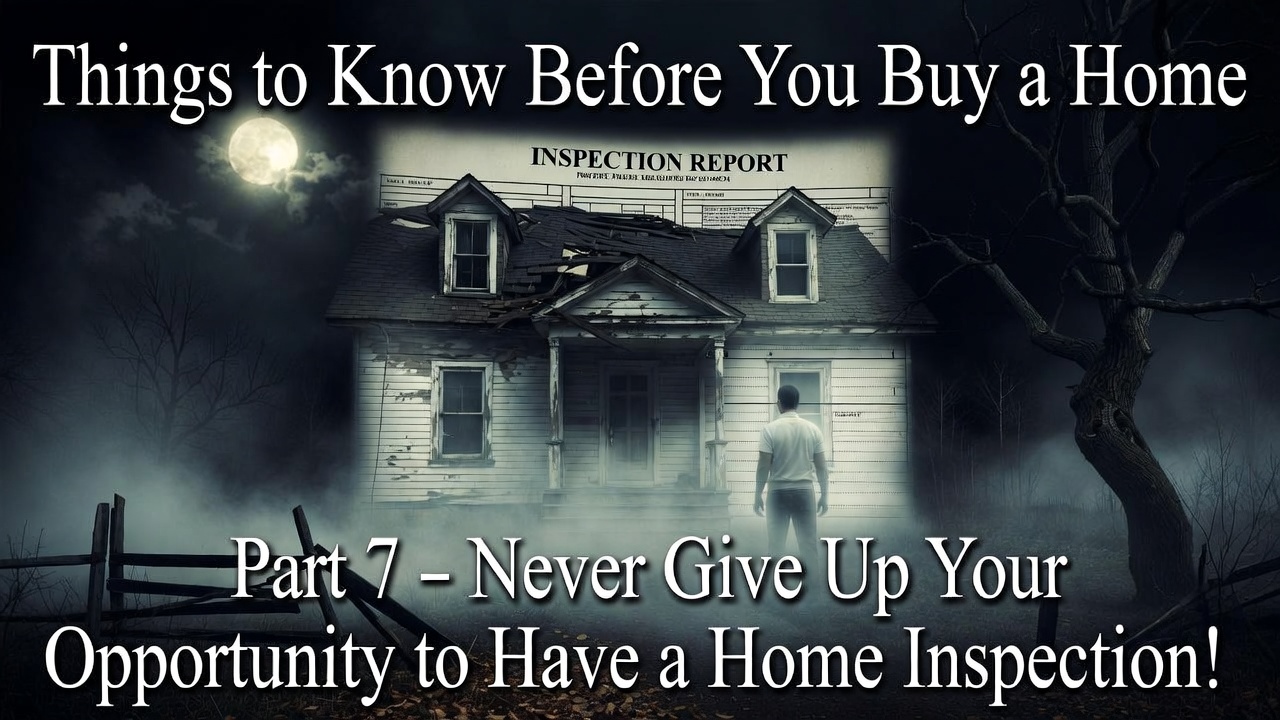
Things to Know Before You Buy a Home: Part 7 – Never Give Up Your Right to a Home Inspection!
- Discover major issues early — Foundation cracks, roof leaks, outdated electrical/plumbing, mold, HVAC problems—these can cost thousands to fix.
- Negotiate repairs or credits — If the inspector finds something serious, you can ask the seller to fix it, give a credit at closing, or lower the price.
- Back out safely — If the problems are too big, you can walk away and keep your earnest money (as long as you’re within the inspection contingency deadline).
- Plan for future costs — Even if everything passes, the inspector tells you the remaining life of major systems (furnace: 10–15 years, roof: 20–30 years, water heater: 8–12 years). This helps you budget for replacements down the road.
How to Keep the Inspection in a Multiple-Offer ScenarioSellers often prefer offers with fewer contingencies to reduce hassle. But you can still win with an inspection contingency in place:
- Work with an experienced real estate agent who knows how to structure offers that feel low-risk to sellers (e.g., shorter inspection periods, clear repair limits, or pre-inspection clauses).
- Communicate proactively with the listing agent — explain that you’re serious and want a smooth process, but need the inspection for peace of mind.
- Offer other strengths: higher earnest money, quick close, or flexible terms to offset the inspection.
I’ve helped buyers win multiple-offer situations while keeping the inspection contingency — it’s about strategy and strong communication, not just waiving rights.The Bottom LineThe home inspection is your final safety net before you own the home. Waiving it to “win the bid” can cost you tens of thousands in repairs—or worse, regret. In today’s market, smart buyers protect themselves with professional inspections.If you’re ready to buy a home in Lakeville, Apple Valley, Eagan, Burnsville, Bloomington, or the south metro, let’s talk. As a real estate agent in Lakeville MN with over 20 years of experience helping buyers avoid costly mistakes, I’ll guide you through the process and make sure you’re protected every step of the way.Ready to buy confidently in 2026? Text or call me today, Tom Sommers with Coldwell Banker Realty, for a free, no-obligation consultation. Let’s find your perfect home—without the hidden risks.
Things to Know Before You Buy a Home: Part 6 – Red Flags on Tour (Spot Them Before You Fall in Love)

- Water Damage or Stains — Look for discoloration on ceilings, walls, or around windows/baseboards (leaks, roof issues, poor grading).
- Mold or Musty Smells — Especially in basements, bathrooms, or near HVAC vents—mold remediation can cost $5,000–$20,000+.
- Cracked or Uneven Flooring — Settling foundation, water damage, or poor subfloor—major structural red flag.
- Doors/Windows That Stick or Don’t Close Properly — Indicates foundation settling or framing issues.
- Outdated Electrical — Old knob-and-tube wiring, overloaded panels, or ungrounded outlets—expensive and dangerous to update.
- Plumbing Issues — Low water pressure, slow drains, rust stains, or visible leaks under sinks.
- Roof Condition — Missing shingles, curling, or dark streaks—replacements often run $10,000–$20,000.
- HVAC Age & Condition — Units over 15–20 years old may need replacement soon ($5,000–$12,000).
- Poor Insulation/Ventilation — High energy bills or condensation on windows—leads to mold and higher utility costs.
- Structural Cracks — Especially in foundation walls or brick/stone exteriors—can signal major settling.
The Power of an Experienced Agent & Inspector You don’t need to be an expert—but you need one on your side. A good real estate agent spots red flags during showings and helps you weigh them:
- Is it minor (easy fix)?
- Is it major (deal-breaker)?
- Is it negotiable (seller repair credit)?
When you find a home you love, the home inspection confirms or uncovers issues. A thorough inspector can save you tens of thousands by identifying problems early. The Bottom Line Buying a home is emotional—but don’t let emotions blind you to red flags. Spot them early, get professional input, and protect yourself from costly surprises. The right home is worth the wait; the wrong one isn’t worth the regret. If you’re ready to buy a home in Lakeville, Apple Valley, Eagan, Burnsville, Bloomington, or the south metro, let’s talk. As a real estate agent in Lakeville MN with over 20 years of experience helping buyers avoid pitfalls and secure the right property, I’ll guide you through every step with honesty and expertise. Ready to buy smart and avoid red flags in 2026? Text or call me today, Tom Sommers with Coldwell Banker Realty, for a free, no-obligation consultation. Let’s find your perfect home—without the hidden headaches.
Things to Know Before You Buy a Home: Part 5 – Is There Something More Important Than the House Itself?

- Remodel the kitchen
- Update bathrooms
- Paint walls
- Install hardwood floors
- Add a deck or landscaping
But you cannot change:
- The school district
- Proximity to shopping, parks, restaurants, and amenities
- Commute time to work
- Neighborhood safety and community vibe
These fixed elements affect your daily life, your family’s future, and your home’s long-term resale value far more than cosmetic changes ever will. Real-Life Examples That Prove the Point
- A buyer chooses a beautiful home but ends up with a 45-minute commute each way. After a few months, the stress becomes unbearable—they regret the purchase.
- Parents prioritize a top-rated school district for their child with special needs or athletic/academic talent, even if the house needs updates. The right school makes the home a better long-term fit.
- A family picks a home in a walkable neighborhood near parks and shops, even though it’s smaller—they end up happier and more connected to the community.
When you buy with resale in mind (and you should—this is an investment), location drives future value. Homes in desirable school districts, convenient locations, and strong communities appreciate faster and sell quicker. How to Make Location the Priority in Your Search
- List your non-negotiables first: School district, commute time, proximity to work, parks, shopping, safety.
- Rank them honestly: Decide what you can compromise on (e.g., smaller square footage) vs. what you absolutely cannot (e.g., a bad school district or 90-minute commute).
- Work with an agent who knows the area: A local expert in Lakeville real estate, Apple Valley homes, Eagan properties, Burnsville, or Bloomington can show you neighborhoods that match your priorities—not just houses.
The Bottom Line The house is important—but location is often more important. You can remodel the home; you can’t remodel the neighborhood, school district, or commute. The more you consider these fixed factors upfront, the happier you’ll be long-term—and the better your investment will perform. If you’re ready to buy a home in Lakeville, Apple Valley, Eagan, Burnsville, Bloomington, or the south metro, let’s talk. As a real estate agent in Lakeville MN with over 20 years of experience helping buyers find the right location and home, I’ll help you prioritize what truly matters and avoid costly regrets. Ready to buy smart in 2026? Text or call me today, Tom Sommers with Coldwell Banker Realty, for a free, no-obligation consultation. Let’s find the perfect fit for your family and future.
Things to Know Before You Buy a Home: Part 4 – Cracking the Down Payment Code

One of the biggest myths holding back home buyers in the Minneapolis Saint Paul metro area (especially the south metro: Lakeville, Apple Valley, Eagan, Burnsville, Bloomington) is the belief that you must put 20% down to buy a home. That’s simply not true anymore. The Evolution of Down Payment Requirements
- Early 1900s: Buyers often put 50% down and financed the rest for short terms.
- Post-World War II: 20% down became the norm.
- Today (2026): Low-down-payment options make homeownership accessible without draining your savings.
You can still put 20% down (or more) if you want to—it lowers your monthly payment, builds equity faster, and acts like a forced savings plan. But the most important benefit for many buyers is avoiding PMI (private mortgage insurance).What Is PMI and How Much Does It Cost? If your down payment is less than 20% (or you have less than 20% equity), most lenders require PMI to protect their investment. After the 2008 crash, PMI was expensive—often hundreds per month. That’s changed significantly. Today, PMI can be as low as $30–$100/month on many loans, depending on your credit, loan size, and lender. Always talk to your loan officer for exact numbers—don’t assume it’s a deal-breaker. The Benefits of 20% Down (Even If It’s Not Required)
- You look stronger in a multiple-offer situation (especially on foreclosures or competitive listings).
- Lower monthly payments and faster equity build-up.
- No PMI = more money in your pocket every month.
Low-Down-Payment Options Available in 2026You don’t need to drain your savings to buy a home. Here are the most common programs:
- Conventional loans: As low as 3% down if you qualify.
- FHA loans: 3.5% down (great for first-time buyers).
- VA loans: 0% down for eligible veterans.
- USDA/Rural loans: 0% down in qualifying areas.
The key is affordability. Know your comfortable monthly payment, factor in taxes, insurance, utilities, maintenance, and PMI (if applicable), and choose the down payment that fits your budget and goals. The Bottom Line Don’t let outdated myths stop you from buying. You can enter the market with a low down payment and still position yourself as a strong buyer. The right loan officer and real estate agent will guide you through the numbers so you buy confidently. If you’re ready to buy a home in Lakeville, Apple Valley, Eagan, Burnsville, Bloomington, or the south metro, let’s talk. As a real estate agent in Lakeville MN with over 20 years of experience helping buyers navigate the Minnesota home buying process, I’ll connect you with trusted lenders and make sure you understand every cost and option. Ready to crack the down payment code and buy smart in 2026? Text or call me today, Tom Sommers with Coldwell Banker Realty, for a free, no-obligation consultation. Let’s get you pre-approved and prepared.
Things to Know Before You Buy a Home: Part 3 – Credit Score Sins

That Can Derail Your Mortgage One of the most common—and completely avoidable—mistakes home buyers make is committing credit score sins during the mortgage process. These seemingly innocent actions can lower your score, increase your interest rate, or even cause your loan to be denied just days before closing. Here’s what you need to know to stay safe. How Mortgage Lenders Evaluate You When you apply for a mortgage, the lender takes a snapshot of your finances at that moment. They review:
- Credit score
- W-2s and income verification
- Work history
- Assets and savings
- Debt-to-income ratio
Everything is checked again during underwriting—often with a second credit pull shortly before closing. Any sudden changes can raise red flags. The 4 Biggest Credit Score Sins to Avoid During the Home-Buying Process Do not do any of these while your loan is in progress:
- Open new lines of credit — No new credit cards, no new lines of credit at a bank or credit union.
- Finance a new car — Buying or leasing a vehicle adds new debt and lowers your score.
- Take out any new loans — Personal loans, student loan refinancing, or any other borrowing.
- Buy big-ticket items on credit — No new furniture, appliances, or electronics on credit cards or financing plans.
These actions can:
- Drop your credit score (new accounts = hard inquiries + higher credit utilization)
- Increase your debt-to-income ratio
- Trigger lender concerns about your financial stability
I’ve seen buyers lose their dream home two weeks before closing because they opened a new credit card or financed furniture. It’s heartbreaking and completely preventable. When Is It Safe to Make These Changes? After closing—once your loan funds and the home is officially yours. You can then buy a car, furniture, or open new credit lines without risking the mortgage. The Bottom Line Be smart during the mortgage process. Protect your credit score and debt-to-income ratio until after closing. A small mistake can cost you thousands in higher rates or even the entire loan. If you’re planning to buy a home in Lakeville, Apple Valley, Eagan, Burnsville, Bloomington, or the south metro, let’s talk. As a real estate agent in Lakeville MN with over 20 years of experience helping buyers navigate the Minnesota home buying process, I’ll guide you step-by-step to avoid these pitfalls and get you into your new home with confidence. Ready to buy smart in 2026? Text or call me today, Tom Sommers with Coldwell Banker Realty, for a free, no-obligation consultation. Let’s make sure your credit and finances are bulletproof before you start shopping.
