Facebook
 X
X
 Pinterest
 Copy Link
🏡 What Adds the Most Value to a Home Before Selling?
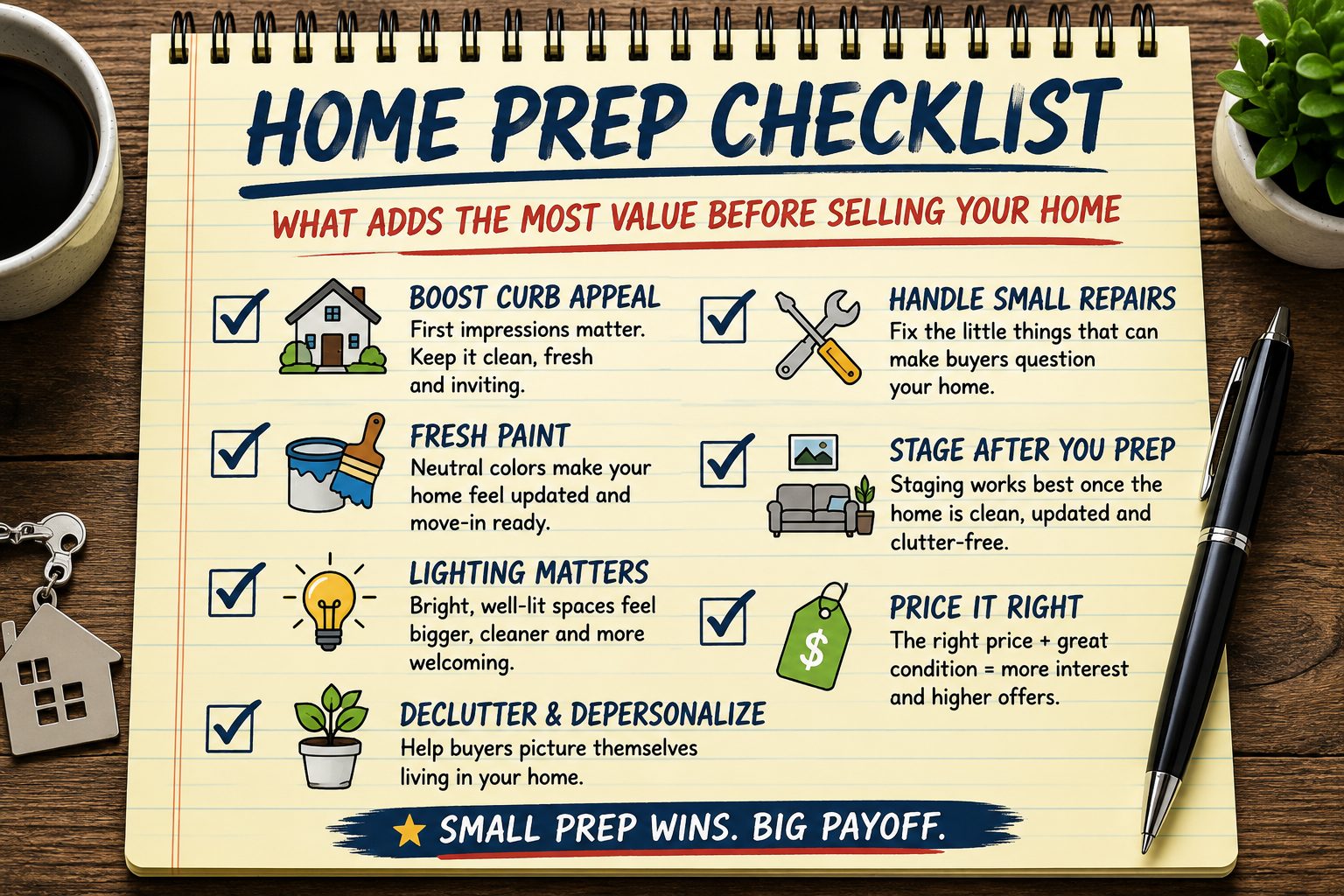
Small Preparation Wins vs Over-Improving Your Home
When preparing a home for sale, most sellers think they fall into one of two categories: either they need to do nothing, or they need to fully remodel the home before listing it. In reality, the most successful sales come from a balanced strategy between pricing and condition working together.
In today’s Twin Cities market, small preparation wins almost always outperform major renovations — especially when they are done with intention.
💡 Pricing + Condition Must Work Together
One of the biggest misconceptions sellers have is believing price alone will overcome condition issues, or that condition alone will fix a pricing mistake.
The reality is simple:
pricing and condition must support each other to create demand.
If a home is priced correctly but feels worn or outdated, buyers hesitate. If a home is beautifully updated but overpriced, buyers still walk away.
The strongest listings in today’s market are the ones where:
- the price feels justified
- the condition feels move-in ready
- and buyers immediately see value compared to alternatives
🏠 Small Preparation Wins vs Over-Improving
The most effective strategy before listing is focusing on small, high-impact improvements, not full-scale renovations.
These are the changes that consistently create the biggest perception shift:
- neutral paint throughout the home
- functional, modern lighting
- curb appeal and basic landscaping cleanup
- deep cleaning and full decluttering
- replacing worn or outdated flooring where needed
These are not “luxury upgrades” — they are perception upgrades. They change how a buyer feels within the first 30 seconds of walking in.
🛋️ The Truth About Staging
Staging can be effective, but only under the right conditions.
The mistake many sellers make is trying to stage a home that is not fully prepared. Beautiful furniture does not hide:
- dirty walls
- worn carpet
- outdated lighting
- or deferred maintenance
Staging works best when the home is already clean, neutral, and well-maintained. Otherwise, it becomes an expensive layer over unresolved issues.
🧠 Real Market Example (Completely Typical Scenario)
Recently, I walked through a home built in 2020 with clients. On paper, it should have shown extremely well. But the dark wood finishes, worn carpet, and visible trim wear made the home feel much older than it actually was.
The feedback was immediate: the home felt like it needed work.
In reality, the issues were not structural — they were presentation-related. And that distinction matters. A relatively small investment before listing could have completely changed buyer perception and likely improved both activity and offers.
💰 Where Sellers Waste the Most Money
The biggest mistake I see is sellers trying to over-improve instead of strategically preparing.
Examples include:
- full remodels that don’t match buyer expectations
- expensive updates in areas buyers don’t value
- or replacing materials without considering design consistency or neutrality
Even something as simple as carpet selection or paint tone can dramatically impact how “updated” a home feels.
Buyers are not just buying features — they are reacting to how the home feels compared to everything else on the market.
📊 The Core Truth in Today’s Market
Small investments often create the biggest perception shift.
Buyers are looking for homes that feel:
- clean
- well cared for
- and move-in ready
When a home delivers that feeling, buyers stop looking for problems and start focusing on value.
🧭 Final Takeaway (What I hope you have learned)
The most successful listings are not the ones that are fully renovated or untouched.
They are the ones where:
pricing and condition align, and small preparation decisions create a strong first impression.
That combination consistently leads to faster sales and stronger offers.
Tom Sommers
Coldwell Banker Realty
(952) 994-7204