
 Facebook
 X
X
 Pinterest
 Copy Link
How Do I Buy and Sell a House at the Same Time?
How Do I Buy and Sell a House at the Same Time?

Buy and sell a house at the same time is something people have been doing for decades. It is not new, and it is not unusual. The challenge today is not the process itself, but the fear and uncertainty people feel when they don’t have a clear plan in place.
Most of the stress comes from worrying about ending up between homes or having one part of the transaction fall apart at the last minute. In reality, those risks can be significantly reduced with proper planning, timing, and strategy.
The importance of timing and structure
In most cases, I recommend a structured 60-day timeline once a home is under contract. That gives enough time to actively find and secure the next home while keeping both transactions aligned.
But the real preparation starts before the home is ever listed.
Fact-finding before you list your home
Before a home ever hits the market, I take clients out to look at homes they may potentially purchase. This is not about choosing a home immediately. It is a fact-finding process designed to understand the market, pricing differences, and what value actually looks like in different areas.
For example, in Bloomington, buyers often pay more for convenience, access to major highways, airport proximity, and employment centers. In Lakeville, buyers typically get more space and value for the money, but with a different lifestyle and commute structure.
Seeing these differences early helps eliminate confusion later and allows clients to make faster, more confident decisions when their home is under contract.
The most common mistake sellers make
One of the biggest mistakes people make is delaying the process due to fear. They assume something will go wrong before they fully understand how the process works.
That hesitation often creates more stress than the transaction itself.
The key is preparation. That includes understanding your home’s value, knowing your expected net proceeds, and getting pre-approved with a loan officer so you clearly understand your buying power before anything begins.
Reducing risk through planning
My role in this process is to reduce risk by eliminating unknowns. That means doing a full market analysis on your current home, connecting you with a trusted loan officer early, running financial scenarios for both transactions, and building a timeline that connects the sale and purchase together.
The goal is to remove guesswork so decisions are made with clarity, not pressure.
The domino effect
The biggest risk in this process is what I call the domino effect. One transaction depends on another.
For example, your buyer may be selling a townhome that is already under contract. That townhome buyer may still be waiting on inspection or appraisal. If that deal falls apart late in the process, it can impact everything above it, including your ability to close on your next home.
That is why I track each step closely, including inspection status, appraisal timing, loan officer communication, and where every party sits in the transaction chain.
The goal is to prevent surprises at the finish line.
What happens when everything is done correctly
When this process is done correctly, everything becomes much more predictable. Clients already know what their home is likely to sell for, understand what they can afford next, have seen potential homes early, and have a full financial picture before they ever list.
At that point, the entire move becomes structured instead of stressful. Everything starts to align instead of feel uncertain.
Final thought
Buying and selling at the same time is not complicated when it is planned correctly. The stress comes from uncertainty, not from the process itself.
With the right timing, preparation, and strategy, the transition from one home to the next can be smooth, controlled, and far less stressful than most people expect.
If you are thinking about buying and selling at the same time, the most important step is building a clear plan before you list your home. I can help you understand timing, pricing, and strategy so you know exactly what to expect before making any decisions.
Tom Sommers – Coldwell Banker Realty
(952) 994-7204

Related Articles
Why I Never Price a Home During the First Listing Appointment
Why I Never Price a Home During the First Listing Appointment

One of the Biggest Mistakes Sellers Make
One of the most common questions I hear is, “What do you think my home is worth?”
It’s a fair question, but my answer usually surprises people.
I don’t give them a price.
Not because I don’t know the market.
Because I haven’t earned the right to give them an accurate answer yet.
After more than 23 years in real estate and nearly $100 million in career sales, I’ve learned that the worst thing I could do is walk into your home, glance around for a few minutes and throw out a number simply because it sounds good.
Anyone can give you a number. A great Realtor gives you evidence.
Every Home Has A Story
Every homeowner has invested something into their home.
Sometimes it’s a new roof.
Sometimes it’s replacement windows.
Sometimes it’s beautiful landscaping.
Sometimes it’s years of remodeling projects completed one room at a time.
Those improvements absolutely matter.
But here’s the difficult conversation I have almost every week.
The improvements that matter most to you are not always the improvements buyers are willing to pay for.
That’s not meant to diminish your investment.
It’s simply how buyers think.
They’re not buying your memories.
They’re imagining their future.
A Story I’ll Never Forget
Several years ago, I listed a home where the owner had invested nearly a quarter of a million dollars creating one of the most incredible backyards I’ve ever seen.
It looked like a botanical garden.
There were waterfalls, mature landscaping, winding paths and beautiful gathering spaces.
I explained to the seller that while the backyard was truly remarkable, it was unlikely the market would return every dollar they had invested.
Fortunately, we found the right buyer.
At the closing table, the buyers couldn’t stop talking about how much they loved the backyard.
The sellers were thrilled.
They felt validated.
The next day I stopped by to pick up my sign and lockbox.
A bobcat and excavator were already in the backyard.
The entire landscape was being removed.
The buyers were putting in a swimming pool.
Nobody was wrong.
The sellers loved the gardens.
The buyers loved the location and wanted something different.
That experience perfectly illustrates one of the biggest lessons in real estate. You’re selling your memories. Buyers are imagining their future.
Why Zillow, Your Neighbor And Even Some Realtors Get It Wrong
I often hear sellers say,
“Zillow says my home is worth…”
Or,
“My neighbor thinks we should list for another $25,000.”
The problem is that neither one is actually evaluating your home.
Zillow relies heavily on public data and algorithms. It doesn’t know the quality of your updates, how your home shows in person or whether your kitchen was beautifully remodeled or hasn’t changed in 30 years.
Your neighbors usually have good intentions.
But they also have a personal interest in protecting what they believe their own home is worth.
Neither one replaces a detailed market analysis.
My Two-Step Pricing Process
Every listing begins the same way.
Step One
I visit your home.
I listen.
I take notes.
I learn about every improvement you’ve made.
I evaluate the condition of the property, the layout, updates, deferred maintenance and features that don’t always appear on a property data sheet.
Step Two
Then I go back to my office.
That’s when the real work begins.
I compare your home against recently sold properties, pending sales, active competition and current buyer demand. I use multiple valuation tools, review local market trends and analyze what buyers are actually paying today.
Only then do I recommend a price.
I’m not asking you to trust my opinion. I’m asking you to look at the evidence.
The Market Changes Faster Than Most People Realize
One of the biggest mistakes sellers make is assuming the market today is the same as it was a month ago.
It isn’t.
I’ve seen market conditions shift in just a matter of weeks.
Right now, many move-in-ready homes are still receiving multiple offers.
At the same time, homes that are overpriced or need updating are sitting on the market much longer than sellers expect.
That’s why pricing isn’t about hope.
It’s about today’s market.
If you’d like to learn more about current market conditions, you may also enjoy my article on What’s Really Happening With Home Prices Right Now. (Internal Link)
Condition Still Drives Value
Today’s buyers place an incredible amount of value on move-in-ready homes.
Fresh paint.
Updated kitchens.
Modern bathrooms.
Neutral colors.
Clean spaces.
Decluttered rooms.
They want to move in and start living.
That doesn’t mean your oak cabinets, wallpaper or custom bar are “bad.”
It simply means buyers may see those features differently than you do.
If you’re curious why some homes sell immediately while others sit for weeks, be sure to read Not Every Home Sells in One Day. (Internal Link)
The Truth You Need To Hear
One thing I tell every seller is this:
I’m never going to tell you what you want to hear. I’m going to tell you what you need to know.
That’s my job.
Pricing your home isn’t about making you happy for one afternoon.
It’s about helping you sell your home for the best possible price in the real market.
Sometimes that means having difficult conversations.
But I’d rather tell you the truth before your home goes on the market than watch it sit for months because no one was willing to have an honest discussion.
Final Thoughts
Your home is worth exactly what the next qualified buyer is willing to pay for it.
Not what Zillow estimates.
Not what your neighbor hopes it’s worth.
Not even what another home is listed for.
The market decides.
My job is to help you understand what that market is telling us before your home ever hits the market.
If you’re thinking about selling your home in Lakeville, Bloomington or anywhere in the Twin Cities, I’d be happy to walk through my two-step pricing process with you and show you exactly how I determine your home’s value.
Call or Text Tom Sommers directly at (952) 994-7204.
Related Articles
- Why Online Home Values Are Outdated
- What’s Really Happening With Home Prices Right Now in the Twin Cities
- The Truth About Multiple Offers in the Twin Cities
The Closing Was Supposed to Be Friday. Then the HOA Got Involved
The Closing Was Supposed to Be Friday. Then the HOA Got Involved.
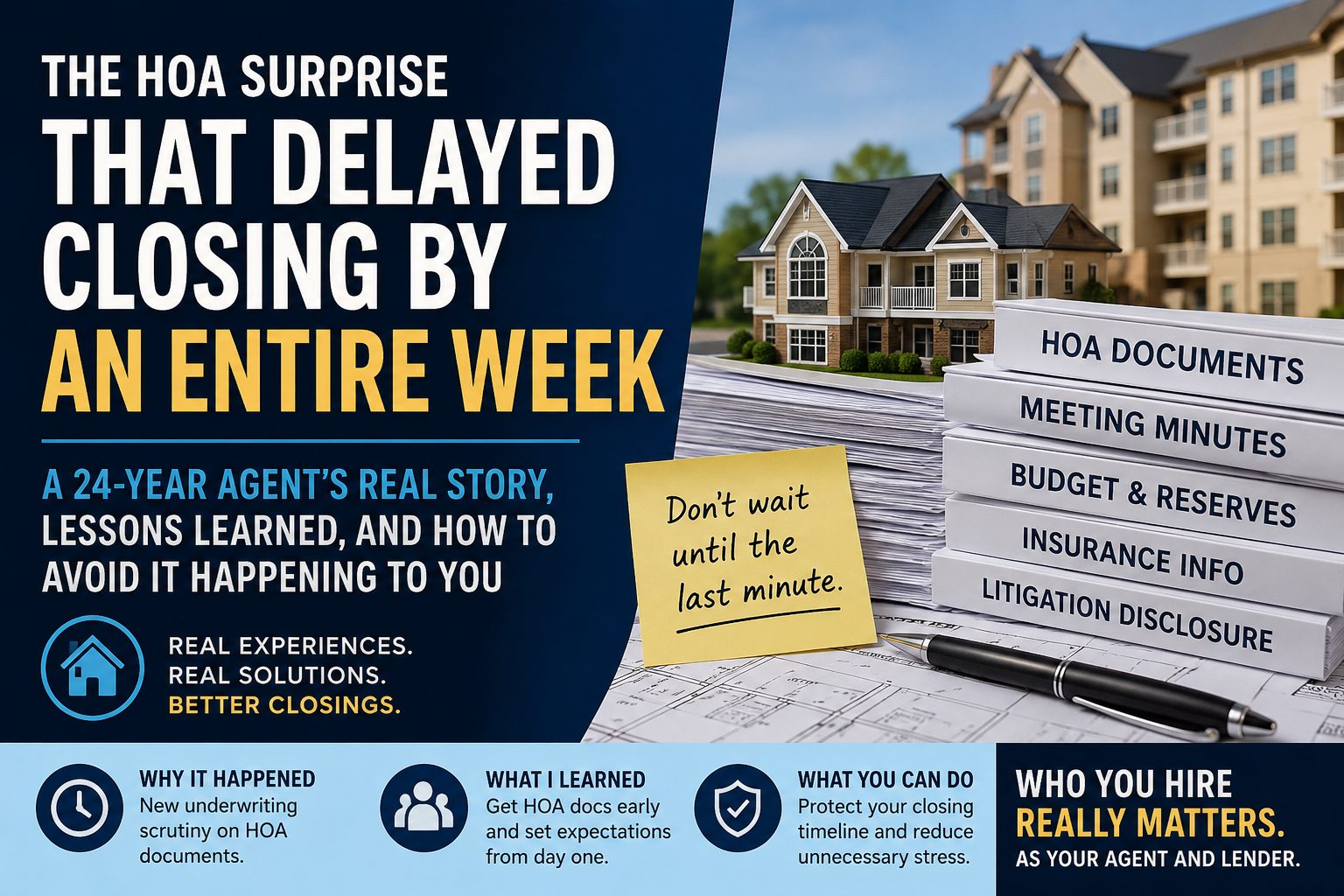
Everything Was On Track Until The Last Week
One of the most frustrating transactions I’ve experienced in nearly 24 years of real estate happened recently during what should have been a routine closing.
The buyers were excited.
The sellers were packed.
The financing had been approved.
The closing date was set.
Everyone expected to sign on Friday.
Then the HOA got involved.
Actually, to be more accurate, the lender’s review of the HOA documents got involved.
What followed was a week-long delay that caught everyone by surprise.
In almost 24 years of selling real estate, this was the first transaction I’ve personally experienced where a closing was delayed solely because of an underwriter’s review of HOA documentation.
The Problem Wasn’t The HOA
This is important.
The HOA wasn’t necessarily doing anything wrong.
The issue was that additional questions started surfacing late in the process.
The loan file had already gone through underwriting. Then it was reviewed again by a more senior underwriter who started asking detailed questions about the association.
Some of the questions involved information found in the meeting minutes.
Others involved a small commercial use component associated with part of the parking structure.
The questions themselves weren’t necessarily major issues.
The challenge was gathering answers.
Every answer seemed to create another question.
Some responses came quickly.
Others took longer.
Some information was incomplete.
As the clock continued ticking toward closing day, the frustration started building.
The Emotional Side Nobody Talks About
What many people don’t realize is that a delayed closing affects everyone.
The buyers were upset.
The sellers were upset.
Everyone had made plans around a specific closing date.
Fortunately, neither side absolutely had to move that day.
However, my buyers were getting dangerously close to being without a place to live within a matter of days.
That creates stress.
It creates uncertainty.
And when people are stressed, emotions run high.
The difficult part was that there wasn’t a magic solution.
The lender already had people working on the file.
The HOA was responding.
Everyone was trying to do their job.
The reality was that this had become an information-gathering exercise that simply required time.
What I Learned From The Lender After Closing
After the transaction finally closed, the person handling the file reached out to me and explained what happened.
Her explanation was eye opening.
She explained that condo and HOA approvals can be significantly more involved than a typical single-family home purchase because lenders often conduct a separate review of the association itself.
That review may include:
• Budgets and reserve accounts
• Insurance coverage
• Special assessments
• Litigation history
• Delinquency rates
• Meeting minutes
• Governing documents
The file may also go through multiple levels of review.
That means questions can arise later in the process, especially when documentation arrives late or additional clarification is needed.
The lender also acknowledged that communication could have been better earlier in the transaction.
That honesty was appreciated.
Most Buyers Have No Idea This Is Happening
When most people buy into an HOA, they think about things like:
• Pet restrictions
• Parking rules
• Monthly dues
• Exterior maintenance
What they don’t realize is that lenders may be reviewing an entirely different set of documents behind the scenes.
The lender is trying to determine whether the association itself is financially stable and whether anything exists that could create future risk.
That’s a much deeper review than most buyers ever expect.
The Biggest Lesson I Took Away
This experience changed the way I will handle HOA transactions moving forward.
In the past, lenders typically focused heavily on the resale disclosure certificate and basic HOA information.
Going forward, I will be encouraging buyers, sellers and lenders to gather as much HOA documentation as possible as early as possible.
The earlier questions surface, the easier they are to solve.
Waiting until the final week before closing creates unnecessary pressure on everyone involved.
Who You Hire Matters
One of the biggest takeaways from this transaction has nothing to do with the HOA itself.
It has to do with the professionals involved.
The right real estate agent matters.
The right lender matters.
Experience matters.
Communication matters.
No transaction is perfect.
Problems happen.
What matters is having professionals who can identify issues early, communicate clearly and keep everyone moving toward the finish line.
This transaction eventually closed successfully.
The buyers got their home.
The sellers completed their move.
But the process taught me valuable lessons that will help future clients avoid similar delays.
Final Thoughts
The closing was supposed to happen on Friday.
Instead, it happened a week later.
While that may not sound like a major delay, it felt like an eternity to everyone involved.
The biggest lesson is simple.
HOA transactions have become more complex.
Lenders are asking more questions.
And preparation matters more than ever.
If you’re buying a condo, townhome or any property with an HOA, working with an experienced Lakeville MN real estate agent can help you gather information early, navigate the process from the very beginning, and reduce the chance of unexpected delays.
Sometimes the biggest obstacles are not the problems themselves.
They’re the questions nobody knew were coming.
Thinking about buying or selling a townhome, condo or HOA property in Lakeville, Bloomington or anywhere in the Twin Cities?
Call or Text Tom Sommers directly at 952-994-7204 and let’s put together a plan that helps avoid surprises before they happen.
Related Articles
1. Why I Never Price a Home During the First Listing Appointment
2. The Truth About Multiple Offers in the Twin Cities
3. Why Online Home Values Are Outdated
Why Online Home Values Are Outdated
Why Online Home Values Are Outdated

Home School Podcast Episode #4 with Tom Sommers and Liz Sandwick
If you’ve ever searched your address online and looked at your home’s estimated value, you’re not alone.
Millions of homeowners visit websites like Zillow, Realtor.com, Redfin, and other online valuation tools every year hoping to find out what their home is worth. The process is quick, easy, and free.
The problem is that these websites often provide very different answers.
One site may say your home is worth $425,000. Another may estimate $448,000. A third may show $402,000.
So which one is right?
The answer is that none of them truly know what your home is worth.
That was the focus of Episode #4 of Home School, where Minnesota real estate agents Tom Sommers and Liz Sandwick discussed why online home value estimates can be misleading and what actually determines market value.
Why Online Home Values Vary So Much
Most online valuation tools rely on automated valuation models, commonly called AVMs.
These systems pull information from public records, previous sales, tax records, and other available data sources. While the technology has improved over the years, the systems still have significant limitations.
The software cannot walk through your home.
It cannot evaluate the quality of your updates.
It cannot see the new kitchen you installed last year.
It cannot recognize that your roof is brand new or that your basement remains unfinished.
Because of these limitations, online estimates are often best viewed as rough guesses rather than true market values.
Sold Homes Are Only Part Of The Story
One of the biggest misconceptions homeowners have is believing that recent sales are the only thing that matters.
Sold properties provide valuable information because they show what buyers were willing to pay in the past.
However, real estate markets are constantly changing.
A sale from four months ago may not accurately reflect current market conditions.
Professional agents also analyze pending sales and active listings to understand what buyers are doing right now.
Pending sales reveal where the market may be heading.
Active listings show the competition sellers face today.
Without understanding all three categories, it becomes difficult to accurately determine value.
Why Market Conditions Matter
The value of a home is heavily influenced by supply and demand.
When inventory is low and buyer demand is high, sellers often have more leverage.
When inventory increases and buyers have more options, pricing becomes more competitive.
This is where absorption rates become important.
Absorption rates help measure how quickly homes are selling compared to the available inventory.
Understanding these trends allows real estate professionals to evaluate not only what a home may be worth but also how aggressively it should be priced.
No Two Homes Are Exactly The Same
This is one of the biggest reasons online estimates struggle.
Two homes on the same street can have dramatically different values.
Factors that influence value include:
• Condition
• Updates and renovations
• Floor plan functionality
• Lot size
• Location within the neighborhood
• School district boundaries
• Views and privacy
• Garage size
• Finished square footage
• Mechanical updates
A computer model often cannot accurately account for many of these differences.
An experienced agent can.
The Danger Of Overpricing A Home
Many homeowners naturally want to believe the highest estimate they see online.
Unfortunately, buyers determine value, not websites.
When a home is priced too aggressively, it can sit on the market longer, generate fewer showings, and eventually require price reductions.
The first few weeks on the market are often the most important.
Accurate pricing helps maximize exposure, buyer interest, and negotiating leverage.
What Determines A Home’s True Market Value?
Determining market value is both an art and a science.
Professional real estate agents typically evaluate:
• Recently sold comparable properties
• Pending sales
• Active competition
• Market absorption rates
• Property condition
• Updates and improvements
• Neighborhood trends
• Buyer demand
When combined, these factors provide a much more accurate picture than an automated online estimate.
Final Thoughts
Online home value estimates can be useful as a starting point, but they should never be treated as a final answer.
Every home is unique. Every neighborhood is unique. And every market is constantly changing.
If you’re considering selling your home, refinancing, appealing your property taxes, or simply want to understand what your property may be worth in today’s market, a professional market analysis will almost always provide a clearer picture than an online estimate.
Watch the full Home School Podcast Episode #4 above to learn more about how real estate professionals evaluate value and why pricing strategy matters.
For questions about buying or selling real estate in Minnesota, contact Tom Sommers with Coldwell Banker Realty.
Related Articles
- Why I Never Price a Home During the First Listing Appointment
- What’s Really Happening With Home Prices Right Now in the Twin Cities
- Why Is My Home Not Selling
The Truth About Multiple Offers in the Twin Cities
The Truth About Multiple Offers in the Twin Cities

If you are trying to buy a home right now, there is a good chance you have either been involved in a bidding war or you are worried about ending up in one.
The good news is this.
You do not have to win every bidding war.
The goal isn’t to win every bidding war. The goal is to win the right house.
That may sound simple, but it is one of the most important lessons buyers need to understand.
After more than 23 years in real estate throughout Lakeville, Bloomington, the South Metro and across the Twin Cities, I can tell you that losing a house does not mean you failed.
In many cases, it simply means another buyer was a better fit for that particular seller.
How Common Are Multiple Offers Right Now?
Despite what some people believe, not every home is receiving multiple offers.
From what I am seeing in the field, roughly 40% of homes are selling above list price and receiving multiple offers.
Some homes receive:
• Two offers
• Three offers
• Five offers
• Six offers
And occasionally a truly exceptional property might attract ten or more offers.
But here’s what many buyers misunderstand.
Multiple offers are usually driven by condition, not price range.
The homes attracting the most attention are not necessarily the cheapest homes.
They are the homes that show beautifully.
What Buyers Are Really Competing For
The strongest demand right now is for homes that are truly move in ready.
These homes are:
• Clean
• Decluttered
• Updated
• Well maintained
• Professionally presented
The front door is clean.
The paint is fresh.
The trim looks cared for.
The home feels ready for the next owner.
What I have noticed since COVID is that many buyers place a much higher value on convenience than they did in the past.
They do not want projects.
They do not want repairs.
They do not want to spend weekends renovating.
Many buyers would rather pay a premium for a home they can enjoy immediately.
That is one of the biggest reasons certain homes continue to create multiple offer situations.
The Biggest Myth About Bidding Wars
Many buyers believe the highest offer always wins.
That simply is not true.
In reality, sellers are often asking themselves a different question.
“Which buyer is most likely to get me to the closing table?”
That means sellers are evaluating things like:
• Down payment amount
• Financing type
• Earnest money
• Appraisal gap coverage
• Lender reputation
• Closing timeline
• Overall strength of the purchase agreement
The strongest offer and the highest offer are not always the same thing.
How Sellers Often View Financing
As a general rule, many sellers tend to view financing in the following order:
• Cash
• Conventional financing with 20% or more down
• Conventional financing with less than 20% down
• FHA financing
• VA financing
This does not mean FHA or VA buyers cannot win.
They absolutely can.
But many sellers perceive government-backed financing as carrying additional requirements and potential hurdles.
Whether that perception is fair or not, it often influences decision making.
Some conventional buyers with larger down payments may also qualify for appraisal waivers through their lender, which can further reduce uncertainty for the seller.
Again, every situation is different.
But understanding how sellers think can help buyers position themselves more effectively.
What Sellers Are Really Afraid Of
Most sellers are not worried about getting an extra few hundred dollars.
What they are worried about is the transaction falling apart.
Their biggest concerns are usually:
• Financing issues
• Appraisal problems
• Inspection disputes
This is where buyers sometimes make mistakes.
An inspection should be used to identify major concerns.
Things like:
• Foundation issues
• Roof leaks
• Electrical problems
• Significant safety concerns
• Radon issues
What sellers fear is receiving a long repair list full of small cosmetic items after accepting an offer.
Sellers are often selling certainty as much as they are selling a house.
The less uncertainty they feel, the stronger your offer becomes.
Common Buyer Mistakes
Some of the biggest mistakes I see buyers make include:
• Writing too early and thinking being first guarantees success
• Waiting too long on a great property
• Falling in love with one specific home
• Not being fully prepared financially
• Listening to friends and family instead of real estate professionals and lenders
Well meaning advice from people who are not actively buying and selling homes every day can sometimes create more confusion than clarity.
A Real World Example
I recently worked with buyers who were fully qualified, had excellent credit and could comfortably afford the home they wanted.
We submitted a strong offer.
We were even led to believe we were in a great position.
At the last minute another buyer submitted a similar offer.
The difference?
The competing buyer was putting significantly more money down.
The sellers believed that offer carried less risk and chose it instead.
That experience can be frustrating.
But it illustrates an important reality.
Sellers are choosing the offer they believe has the highest probability of closing on time without issues.
The Buyers Who Succeed Understand This One Thing
Buying a home is not a sprint.
It is a marathon.
You may write:
• One offer
• Three offers
• Five offers
Before finding the right home.
That is normal.
It is part of the process.
And in many cases, buyers later discover that the homes they lost were not actually the best fit for them.
What felt like disappointment at the time often turns into gratitude later.
The Goal Isn’t to Win Every Bidding War
The Goal Is to Win the Right House.
The buyers who ultimately succeed are not always the buyers with the most money.
They are the buyers who:
• Stay patient
• Stay prepared
• Trust the process
• Work with experienced professionals
• Keep moving forward when they lose a house
Eventually the right opportunity appears.
And when it does, you need to be ready.
Thinking About Buying a Home in the Twin Cities?
If you are tired of losing out in multiple offers or wondering how to make your next offer stronger, I would be happy to help.
Every situation is different.
Every seller thinks differently.
And every offer should be built around a strategy.
You do not need to win every bidding war. You just need to win the right house.
Call or Text Tom Sommers Directly at 952-994-7204
Lakeville • Bloomington • South Metro • Twin Cities Real Estate
-
Related Articles
Should I Buy a Home First or Sell My House First?
Should I Buy a Home First or Sell My House First?

If you are planning a move, one of the biggest questions you may be asking is:
Should I buy a home first or sell my current house first?
It is a great question.
And the honest answer is this.
There is no one size fits all answer.
Timing matters.
But strategy matters more.
After more than 23 years in real estate throughout Lakeville, Bloomington, the South Metro and across the Twin Cities, I can tell you every move is different.
The right answer depends on your finances, your flexibility and your plan.
Buying First Can Make You More Competitive
If you have the financial ability to purchase before you sell, it can absolutely give you an advantage.
Especially in today’s market.
The reason is simple.
You can write a much stronger offer without making the purchase contingent on selling your current home.
That matters because move in ready homes are still creating multiple offers in many neighborhoods.
When buyers are chasing the same house, a clean non contingent offer can put you in a much stronger position.
Buying first can make you more competitive. But it can also create more financial risk.
The downside is obvious.
You could temporarily carry two mortgage payments.
That is a real concern.
And that is why financing always needs to be the first conversation.
Before making any move, I always ask:
Have you been pre approved for both options?
That answer shapes everything else.
Selling First Is Usually the Safer Financial Choice
Traditionally, selling first has been the more conservative path.
And in many situations, I still recommend it.
Why?
Because you know exactly:
• What your home sold for
• What your available cash will be
• What monthly payment feels comfortable
• How aggressively you can shop
That removes a lot of uncertainty.
For many homeowners, selling first creates more clarity and less financial stress.
But there is an important catch.
If you plan to buy with a home sale contingency, your home needs to be ready.
Not almost ready.
Ready.
The Best Strategy Starts Before Your Home Hits the Market
One of the best things you can do is prepare early.
As you are getting your home ready to sell:
• Start touring homes
• Learn neighborhoods
• Narrow down price ranges
• Understand what your money buys in each area
• Build your financing plan
That way, once your house goes active, you are already prepared.
And once you receive an accepted offer, you can move quickly with confidence.
The better prepared you are before listing, the easier the transition becomes.
Why This Feels So Different Right Now
The Twin Cities market can feel confusing.
Some homes are sitting.
Others attract 15 or 20 buyers almost immediately.
That is what many people are struggling with right now.
Why does one home sit for weeks while another one creates a frenzy?
Usually it comes down to:
• Pricing
• Condition
• Location
• Updates
• Buyer demand in that price range
That is why every move needs a plan built around your specific situation.
Not somebody else’s.
What I Recommend Most Often
In most situations, I still recommend selling first.
It tends to reduce financial pressure and gives people a clearer picture of their next move.
But every situation is different.
Some buyers truly benefit from purchasing first.
Others are much better off selling first.
The best move depends on your finances, your flexibility and your goals.
There is no shortcut.
And there is no universal answer.
Thinking About Moving and Not Sure Where to Start?
If you are trying to decide whether to buy first or sell first, I would be happy to sit down with you and talk through your options.
Every move is different.
And a clear plan upfront can save a lot of stress later.
Timing matters. But strategy matters more.
If you are buying or selling in Lakeville, Bloomington, the South Metro or anywhere in the Twin Cities metro area, let’s put together a plan that works for your situation.
Call or Text Tom Sommers Directly at 952-994-7204
Lakeville • Bloomington • South Metro • Twin Cities Real Estate
Related Articles
- The Truth About Multiple Offers in the Twin Cities
- The Closing Was Supposed to Be Friday. Then the HOA Got Involved
- What’s Really Happening With Home Prices Right Now in the Twin Cities
What’s Really Happening With Home Prices Right Now in the Twin Cities?
What’s Really Happening With Home Prices Right Now in the Twin Cities?

If you have been wondering whether home prices in the Twin Cities are going up or down right now, you are not alone.
It is one of the most common questions buyers and sellers are asking.
The honest answer is this.
For the most part, home prices are staying fairly flat. But the condition of the home matters more than ever.
That may sound simple, but it is a huge shift in today’s market.
As somebody who has been in real estate for over 23 years and physically inside homes every single day throughout Lakeville, Bloomington, the South Metro and across the Twin Cities, I can tell you the market is very active.
But not every home is moving the same way.
Move In Ready Homes Are Driving Prices Higher
The strongest activity right now is happening with homes that are:
• Move in ready
• Clean
• Updated
• Well maintained
• Priced attractively
Those homes are still creating multiple offers in many cases.
That is especially true in price ranges under $400,000 and many homes under $600,000.
Buyers continue to compete heavily for homes with:
• White cabinets
• Updated kitchens
• Wide plank flooring
• Stainless steel appliances
• Stone countertops
• Neutral finishes
In many cases, multiple offers are doing more to push values upward than list prices themselves.
Normally in spring we expect to see listing prices rise.
This year I have seen more modest pricing adjustments.
The bigger story has been buyer competition driving the final sales price higher after the home hits the market.
Homes Needing Work Are Telling a Very Different Story
On the flip side, homes needing work are not getting the same response.
Homes that are:
• Outdated
• Poorly maintained
• Overpriced
• Ignoring repairs
• Trying to compete with fully updated homes
Are often sitting much longer.
Some sellers are still pricing homes like it is 2021.
Today’s buyers are much more selective.
They are paying attention to condition more than ever.
A home can have a great location and strong square footage, but if buyers walk in and immediately notice deferred maintenance, odors or big updates needed, that can slow activity quickly.
The condition of the home matters more than ever in today’s market.
That is one of the clearest patterns I am seeing right now.
What This Means for Buyers
Buyers still absolutely have opportunities.
In fact, some of the best opportunities I am seeing right now are homes that may need:
• Paint
• Flooring
• Lighting
• Cosmetic updates
Those homes often avoid the biggest bidding wars and can create a great opportunity to build equity over time.
The buyers winning today are often the ones willing to look past cosmetic issues and focus on long term value.
What This Means for Sellers
Sellers can still do extremely well in this market.
But pricing and preparation matter.
More than ever.
Homes that are updated, clean and priced attractively are creating urgency and strong buyer activity.
Homes priced too aggressively without matching condition are seeing slower results.
Today’s market rewards preparation, realistic pricing and understanding what buyers actually want.
The Twin Cities Market Is Still Strong
One thing that continues to stand out about the Twin Cities market is the long term strength of our communities.
We continue to benefit from:
• A strong job market
• Clean and safe suburbs
• Great local businesses
• Convenient access to shopping and restaurants
• Communities people genuinely want to live in
That continues to support demand throughout the metro.
Lakeville, Bloomington and many other Twin Cities suburbs remain very desirable places to live.
Thinking About Buying or Selling?
If you are wondering what your home is really worth right now or trying to decide whether this is the right time to buy, I would be happy to help.
Every neighborhood and every home is a little different.
That is why local experience matters.
What’s happening with home prices right now depends heavily on condition, pricing and location.
If you want an honest boots on the ground perspective based on what is actually happening throughout Lakeville, Bloomington, the South Metro and the Twin Cities metro area, feel free to reach out anytime.
Call or Text Tom Sommers Directly at 952-994-7204
Lakeville • Bloomington • South Metro • Twin Cities Real Estate
Related Articles
- Why Online Home Values Are Outdated
- Why I Never Price a Home During the First Listing Appointment
- Not Every Home in the Twin Cities Is Selling in One Day
Not Every Home in the Twin Cities Is Selling in One Day
Not Every Home in the Twin Cities Is Selling in One Day

If you spend enough time online reading headlines or scrolling social media, you would think every single home in the Twin Cities sells instantly with 25 offers over asking price.
As somebody who has been in real estate for over 23 years and physically walked through well over 100 homes in the last two weeks, I can tell you that simply is not true.
The Market Is More Balanced Than People Realize
The average home in the Twin Cities is taking roughly 50 days from listing date to pending status.
Let that sink in for a moment.
Many homes are sitting far longer than people realize.
Now to be fair, there are absolutely homes that still sell very quickly.
Homes that are:
• Move in ready
• Updated
• Clean
• Properly staged
• Priced compellingly
Those homes can still generate immediate activity and multiple offers.
Some properties even sell before most buyers know they were available because agents already had buyers lined up before the listing officially hit the market.
But just because some homes sell quickly does not mean all homes are selling in one day.
That is simply misinformation.
What I Am Actually Seeing in the Field Every Day
What I am seeing across the Twin Cities market right now is a much more balanced and realistic market than people are being led to believe.
The homes struggling right now are usually:
• Overpriced
• Poorly prepared
• Dirty
• Outdated
• In need of repairs
• Ignoring current buyer expectations
Sellers who still think this is the 2021 market are finding out quickly that buyers have become much more selective.
That does not mean the market is bad.
It means buyers are being more careful about where they spend their money.
Townhomes and condominiums have also slowed down significantly compared to single family homes, where the majority of buyer activity is still happening right now.
Buyers Still Have Opportunities Right Now
One of the biggest misconceptions I keep hearing is that buyers do not even stand a chance anymore.
That is simply not true.
The buyers winning right now are the ones who:
• Physically go look at homes
• Understand the market
• Stay patient
• Act decisively when the right property appears
There are opportunities everywhere right now for buyers willing to do the work.
In fact, some of the best opportunities I am seeing are homes that are structurally solid but need cosmetic updates like:
• Paint
• Flooring
• Countertops
• Lighting
• Minor cosmetic improvements
Those homes often sit longer than fully updated properties, which creates room for negotiation and opportunity.
Not every buyer needs a perfect HGTV home to make a smart purchase.
Sellers Can Still Win in This Market
This is still a very active real estate market for sellers.
But preparation matters now more than ever.
The homes generating the strongest activity are the ones with:
• Proper pricing
• Strong presentation
• Clean condition
• Professional photography
• Smart marketing
• Realistic expectations
Buyers today are paying attention to details.
They have become far more selective than they were a few years ago.
Why Working With the Right Agent Matters
The loudest voices in real estate are not always the people doing the most work in the field.
That is why I believe it is more important than ever to work with somebody who is:
• Actively out showing homes
• Negotiating contracts
• Watching buyer behavior in real time
• Studying pricing trends every single day
• Actually experiencing the market instead of repeating headlines
The Twin Cities housing market is not doom and gloom.
It is also not the feeding frenzy many people are describing online.
It is a market that rewards:
• Preparation
• Strategy
• Experience
• Realistic expectations
Thinking About Buying or Selling in the Twin Cities?
If you are thinking about buying or selling in Lakeville, Bloomington or anywhere in the Twin Cities metro area, feel free to call or text me directly.
I am physically inside these homes every single day and I am always happy to give people an honest perspective on what is really happening in the market right now.
Stop guessing based on headlines, social media posts and secondhand opinions.
Talk with somebody who is actually out in the field working in this market every single day.
Whether you are buying your first home, moving up, downsizing or trying to understand what your current home is worth, I would be happy to help you build a strategy that works for your situation.
Call or Text Tom Sommers Directly at 952-994-7204
Lakeville • Bloomington • Twin Cities Metro Real Estate
Related Articles
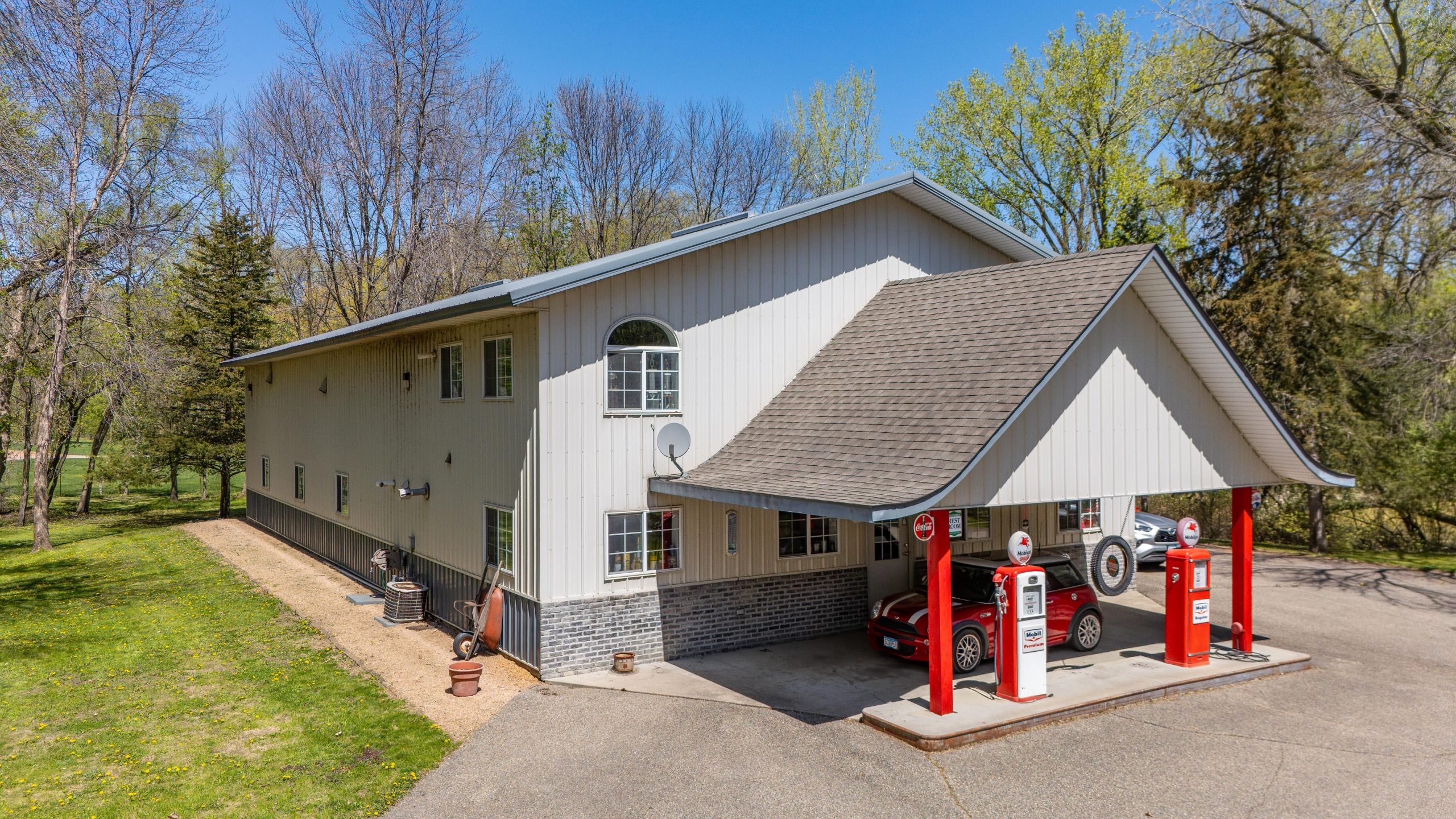
20810 Parkfield Ave, Jordan MN, 10 Acres, A Move In Ready Home, And A 40×80 Dream Shop
20810 Parkfield Ave, Jordan MN, 10 Acres, A Move In Ready Home, And A 40×80 Dream Shop
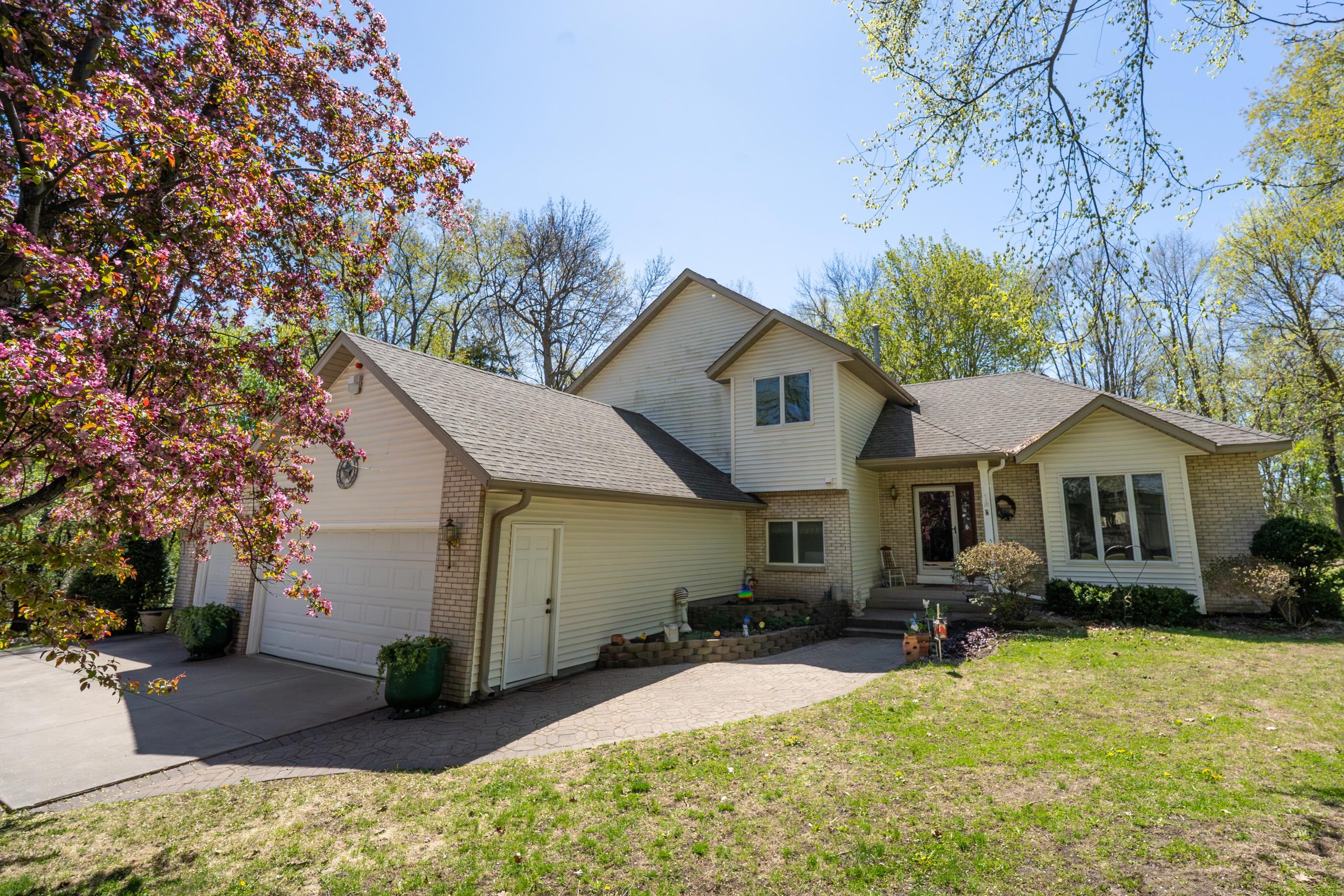
Some properties check boxes. This one changes what is possible.
Call or Text Tom Sommers at 952-994-7204
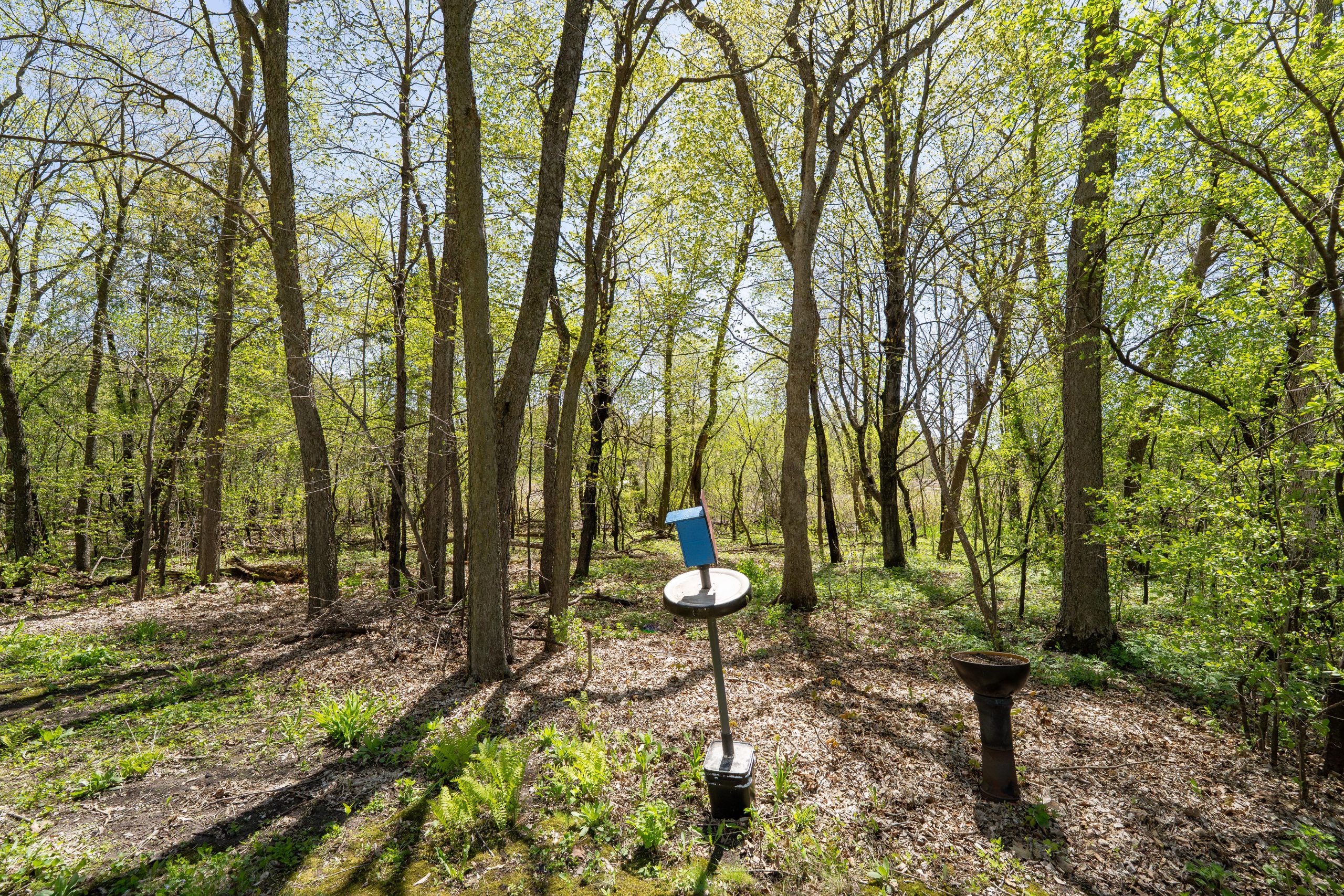
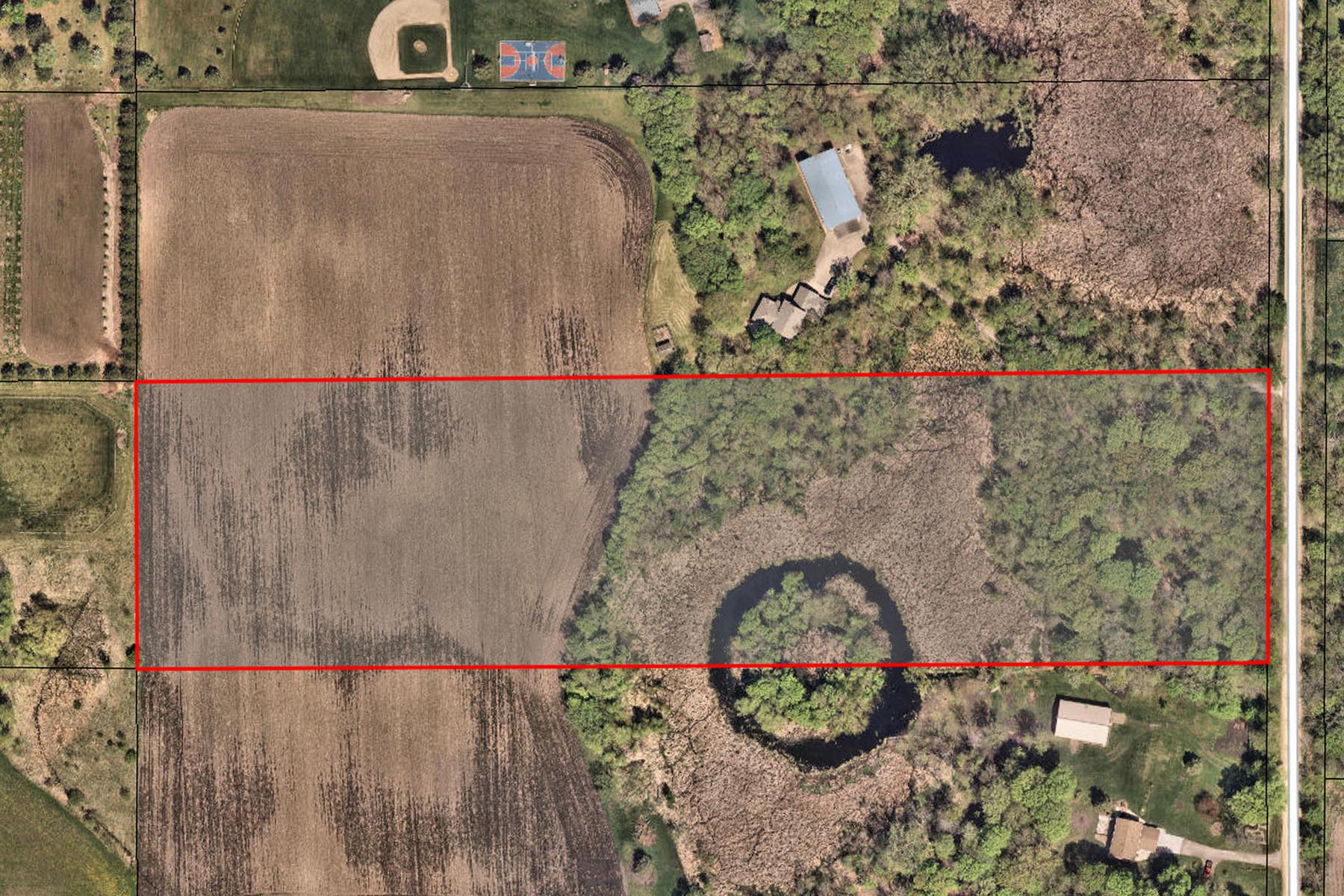
Located at 20810 Parkfield Ave in Jordan MN, this rare 10 acre property offers the kind of lifestyle many buyers talk about but rarely find. You get privacy, usable land, mature trees, peaceful countryside views, a move in ready home, and an incredible 40×80 pole barn, all just minutes from downtown Prior Lake.
That combination is what makes this property so special.
You are not choosing between country living and convenience.
Here, you get both.
The home features over 2,400 finished square feet with 4 bedrooms, 3 bathrooms, and an oversized 3 car garage. It offers the comfortable and practical layout buyers want with:
• Main floor living options
• Main floor laundry
• Main floor bedroom
• Private primary suite
• Multiple entertaining spaces
• Beautiful outdoor deck and patio areas
But the real magic is the setting.
Picture:
• Quiet mornings on the deck
• Evenings on the patio
• Fresh eggs from your own chicken coop
• Open skies and peaceful countryside views
• Space to breathe and enjoy life differently
Approximately 5 acres are currently rented for farming, creating added flexibility and potential income while still leaving plenty of room to enjoy the property yourself.
This is the kind of acreage that lets you breathe.
If you have dreamed of:
• Horses
• Hobby farming
• Gardens
• Additional outbuildings
• Equipment storage
• Recreational vehicles
• Wide open space without neighbors on top of you
This property deserves your attention.
And then there is the shop.
The 40×80 pole barn is not just an outbuilding.
It is a major part of the value.
Complete with:
• Concrete floors
• Electric
• Bathroom
• Office space
• Entertaining area
• Upper storage
• Multiple workshop areas
• Massive 15 foot door
• 16 foot sidewalls
This setup is ideal for:
• Car collectors
• Contractors
• Woodworkers
• Mechanics
• RV owners
• Boat owners
• Hobbyists
• Home based businesses
This is not just storage.
This is space to build, create, repair, organize, entertain, and dream bigger.
The location adds even more value. You are only about 5.3 miles south of downtown Prior Lake, giving you quick access to:
• Restaurants
• Shopping
• Schools
• Parks
• Lakes
• Trails
• Everyday conveniences
Prior Lake and Scott County are known for outdoor recreation, boating, beaches, fishing, trails, and regional parks. You get all the benefits of country living while still being close enough to everything you need.
That is what makes this property so appealing.
You can:
• Live quietly with privacy and peaceful views
• Work from home with room for a business or workshop
• Store boats, RVs, trailers, and recreational toys
• Build out hobbies like woodworking or car collecting
• Raise chickens or create a hobby farm
• Enjoy usable land with endless possibilities
• Create a lifestyle that simply is not possible on a standard city lot
This is more than a house.
It is a lifestyle property.
Properties that combine:
• Nearly 10 acres
• A move in ready home
• A compliant septic system
• A massive shop
• Income potential
• Privacy
• Convenience near Prior Lake
rarely become available.
If you have been searching for acreage near Prior Lake, Jordan, or the south metro Twin Cities, this is one you truly need to see in person.
Call or Text Tom Sommers at 952-994-7204
default
Waiting To Buy A Home Because Of Interest Rates? Read This First
Waiting To Buy A Home Because Of Interest Rates? Read This First

One of the biggest questions I’m hearing right now from home buyers in Lakeville, Bloomington, and throughout the Twin Cities is simple.
“Should I wait for interest rates to come down before buying a home?”
It’s a fair question.
As of the writing of this blog, conventional 30 year fixed mortgage rates are averaging around 6.5%. The minute rates move over 6%, I personally see some buyers back away from the market because they become nervous about the monthly payment. Then when rates dip back down, many of those same buyers suddenly jump back into the market again.
The challenge is that nobody truly knows where rates are headed next.
Trying to perfectly time the housing market is a little like trying to predict the stock market. You can make educated decisions based on the information available today, but there are never guarantees.
What I can tell you from real world experience is this. Move in ready homes are still getting a lot of activity in today’s market, especially in Bloomington under $400,000 and Lakeville under $500,000. Buyers are still competing heavily for clean, updated single family homes while townhomes and condominiums have generally slowed down.
That tells me there are still plenty of buyers actively searching for the right opportunity.
Recently, I was introduced to a temporary mortgage program that could help reduce some of the stress buyers are feeling right now. Through June 30th, there is currently a free one year interest rate buydown available for qualified buyers regardless of price range.
For many buyers, this could create a meaningful reduction in their monthly payment during the first year of homeownership.
Why does that matter?
Because the monthly payment is what many buyers are focused on right now. Between mortgage rates, taxes, insurance, and PMI or private mortgage insurance, the total payment can sometimes feel intimidating.
As a rough estimate, I often tell buyers to figure approximately $60 per month in payment for every $10,000 borrowed. That helps put things into perspective quickly when reviewing different price points.
What I personally like about this temporary buydown opportunity is that it gives buyers breathing room during the first year. If rates improve down the road, refinancing could become an option later. That creates a potential double win for buyers who are trying to make smart long term decisions instead of waiting endlessly for the “perfect” market conditions.
There’s an old saying in real estate.
“Marry the house, date the rate.”
In other words, find the home you truly love. Interest rates can potentially change later through refinancing. The home itself may not still be available once more buyers jump back into the market.
That’s something many buyers need to seriously think about right now.
If mortgage rates eventually drop into the low 5% range again, there is a very good chance even more buyers will flood back into the market. More competition can lead to multiple offers and rising home prices. That is not a scare tactic. It is simply how supply and demand works in real estate.
At the same time, I always encourage buyers to stay financially responsible. You never want to stretch yourself so thin that homeownership becomes stressful. There is nothing wrong with letting another buyer overpay for a property if it protects your long term financial health.
The goal is not just buying a house.
The goal is building a stable future.
The good news is this.
There are still opportunities available right now for buyers who are willing to take action, ask questions, and put together a smart game plan. Whether you are a first time buyer, moving up into your next home, or simply tired of waiting on the sidelines, this temporary program could be worth exploring before the June 30th deadline.
If you have questions about the current market in Lakeville, Bloomington, or anywhere in the Twin Cities area, I would be happy to help walk you through your options.
Text “buydown” to 952-994-7204 to learn more.
